

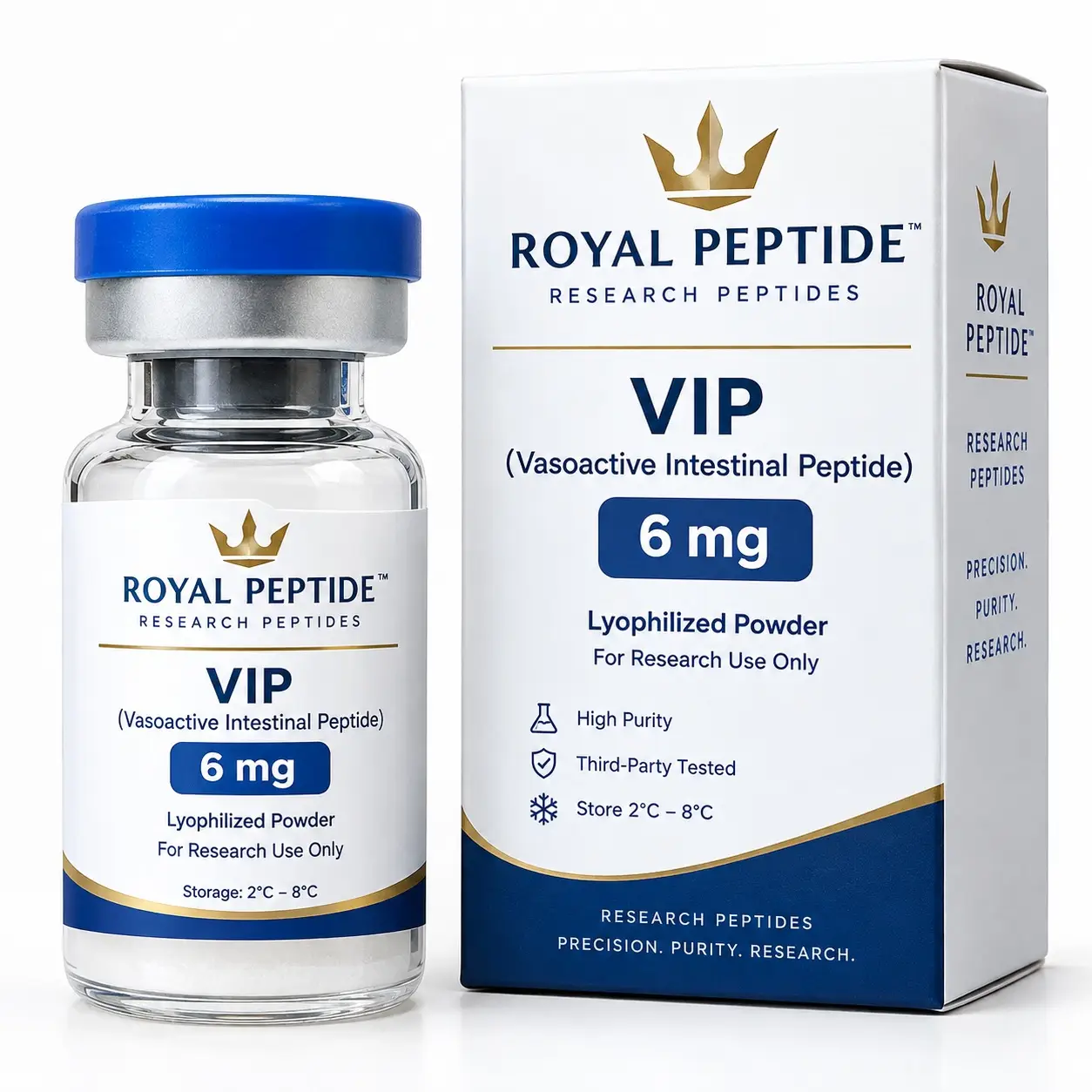
VIP Vasoactive Intestinal Peptide 6mg | Research Peptide
VIP Vasoactive Intestinal Peptide 6mg | Research Peptide is a research peptide supplied for laboratory and scientific research applications. Vasoactive intestinal peptide (VIP) is a naturally occurring 28-amino-acid neuropeptide that has been extensively studied in cardiovascular, gastrointestinal, respiratory, neurological, and immune-system research.
What Is VIP Vasoactive Intestinal Peptide?
VIP (Vasoactive Intestinal Peptide) is a peptide hormone and neuropeptide identified in intestinal tissue and subsequently studied throughout the central and peripheral nervous systems. Research has examined VIP and its receptors in relation to vascular signaling, smooth-muscle activity, gastrointestinal physiology, neurotransmission, and immune regulation.
The VIP peptide consists of 28 amino acids. The compound is also identified by the registry number CAS 37221-79-7 in NCBI resources.
VIP Vasoactive Intestinal Peptide 6mg Specifications
- Product: VIP (Vasoactive Intestinal Peptide)
- Quantity: 6 mg
- Peptide length: 28 amino acids
- CAS Number: 37221-79-7
- Product category: Research peptide
- Research status: Laboratory research use
- Research areas: Neurobiology, peptide signaling, gastrointestinal physiology, vascular biology, and immunology
- Intended use: Laboratory and scientific research only
VIP Peptide Research Applications
VIP Vasoactive Intestinal Peptide Research
Research involving VIP has examined interactions with VPAC1 and VPAC2 receptors and downstream cellular signaling. Scientific literature describes VIP as having diverse biological effects involving neurotransmission, vascular signaling, gastrointestinal function, and immune regulation.
VIP and Neurobiology Research
VIP is widely distributed within the nervous system and has been investigated as a neuropeptide and neurotransmitter. Research has examined its role in neuronal signaling and communication between cells.
VIP and Cardiovascular Research
Vasoactive intestinal peptide has been studied in relation to vascular signaling and smooth-muscle relaxation. These properties have made VIP relevant to laboratory research involving cardiovascular physiology and receptor signaling.
VIP and Gastrointestinal Research
VIP was originally identified in intestinal tissue and continues to be investigated in gastrointestinal physiology. Research includes its relationship with smooth-muscle activity, intestinal secretion, and gastrointestinal signaling pathways.
VIP and Immune Research
Scientific research has also examined VIP signaling in immune cells and its relationship with cytokine production, immune-cell activity, and inflammatory pathways.
Why Choose VIP 6mg for Research?
A VIP Vasoactive Intestinal Peptide 6mg research product provides researchers with a defined quantity of VIP for laboratory investigations involving peptide signaling and receptor-related studies.
Researchers should review the supplier’s current certificate of analysis (CoA), purity information, storage requirements, and batch documentation before laboratory use.
Important Research-Use Information
VIP 6mg should be represented as a research-use product and not as a product intended to diagnose, treat, cure, or prevent any disease. It should not be presented as a recommended human dose.
The 6 mg quantity refers to the amount of product supplied and is not a dosage recommendation.
Researchers should follow applicable laboratory procedures, institutional requirements, handling instructions, and local regulations.
VIP Vasoactive Intestinal Peptide 6mg FAQs
What is VIP Vasoactive Intestinal Peptide?
VIP stands for Vasoactive Intestinal Peptide, a naturally occurring 28-amino-acid neuropeptide studied in several physiological and cellular signaling systems.
What is the CAS number for VIP?
The CAS registry number listed by NCBI for VIP is 37221-79-7.
What does VIP 6mg mean?
VIP 6mg indicates a research product containing a stated quantity of 6 mg of Vasoactive Intestinal Peptide. It does not represent a recommended human dose.
What is VIP used for in research?
VIP is investigated in areas including neurobiology, gastrointestinal physiology, vascular signaling, receptor biology, and immune-system research.
Is VIP 6mg for human use?
This product description should be limited to laboratory research use. It should not be marketed as an approved human treatment or as medical advice.
Research References
Researchers can consult authoritative scientific databases such as NCBI MeSH, PubMed, and PubChem for additional information regarding VIP structure, biology, and published research.
| Weight | N/A |
|---|---|
| Quantity | 5 Boxes For $300, 10 Boxes For $600 |
Reviews
There are no reviews yet.